
A New Initiative—or a New Power Mechanism?
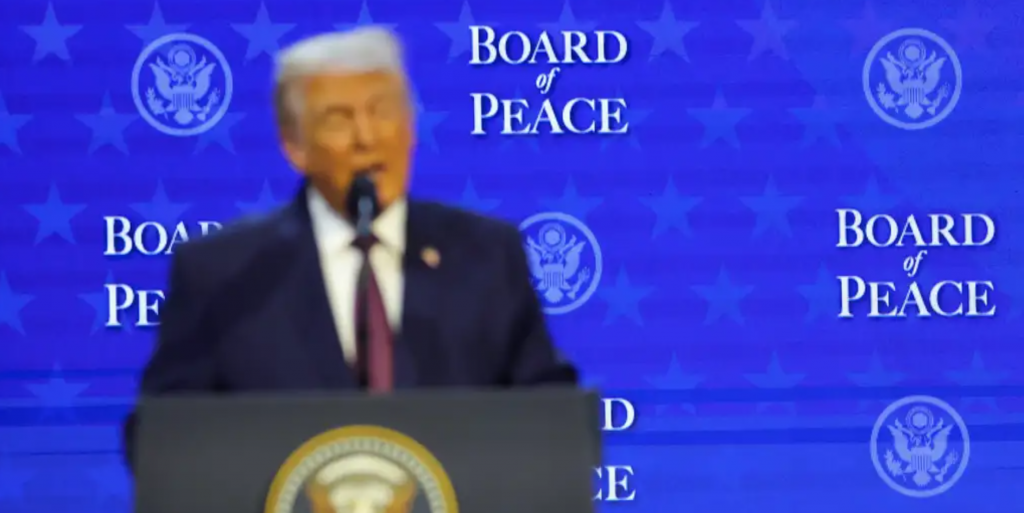
A recently discussed initiative often referred to as a “Peace Council” has sparked debate among analysts and policymakers. According to reports, the concept—linked to Donald Trump—is being viewed not only as a diplomatic mechanism, but potentially as an instrument of personal political influence.
At first glance, such a council appears to promote dialogue and conflict resolution. But behind the scenes, experts are asking a different question:
Who really controls the agenda—and what does it mean for global stability?
Influence Beyond Traditional Structures
Unlike established international institutions, this proposed structure could operate with greater flexibility—and less oversight.
That raises key concerns:
- Decision-making may become more centralized
- Political influence could outweigh institutional processes
- Strategic goals may shift depending on leadership priorities
For observers in the European Union, this signals a potential shift away from predictable, rules-based diplomacy toward more personalized global influence.
Why Europe Is Paying Attention
Europe has long relied on stable alliances and structured international cooperation. Any move toward informal or personality-driven diplomacy introduces uncertainty.
If initiatives like this gain traction, they could:
- Alter transatlantic relations
- Influence conflict resolution strategies
- Shift the balance of geopolitical power
For European policymakers, the challenge is not just understanding the initiative—but anticipating its consequences.
The Economic Angle: Uncertainty Has a Price
Geopolitical shifts rarely stay confined to politics—they quickly impact markets.
Even the perception of changing power dynamics can lead to:
- Market volatility
- Investor hesitation
- Currency fluctuations
- Changes in capital flow
In today’s environment, uncertainty itself becomes an economic factor.
From Global Politics to Personal Finances
For individuals across Europe, especially those aged 30–60, these developments are increasingly relevant.
They can translate into:
- Instability in financial markets
- Pressure on long-term investments
- Reduced predictability in income and savings
Global political influence is no longer distant—it directly shapes financial reality.
A Changing System
The discussion around a “Peace Council” reflects a broader transformation:
- Traditional institutions are being questioned
- Power is becoming more personalized
- Stability is becoming less predictable
This creates a new environment where both governments and individuals must adapt more quickly than before.
Conclusion: A Signal of a New Era
Whether the “Peace Council” becomes a formal institution or remains a political concept, one thing is clear:
The way global influence is exercised is changing.
For Europe—and for individuals within it—this shift brings both uncertainty and new challenges.
In a world where decisions can be shaped by individuals as much as institutions, the ability to adapt is becoming more important than ever.
