
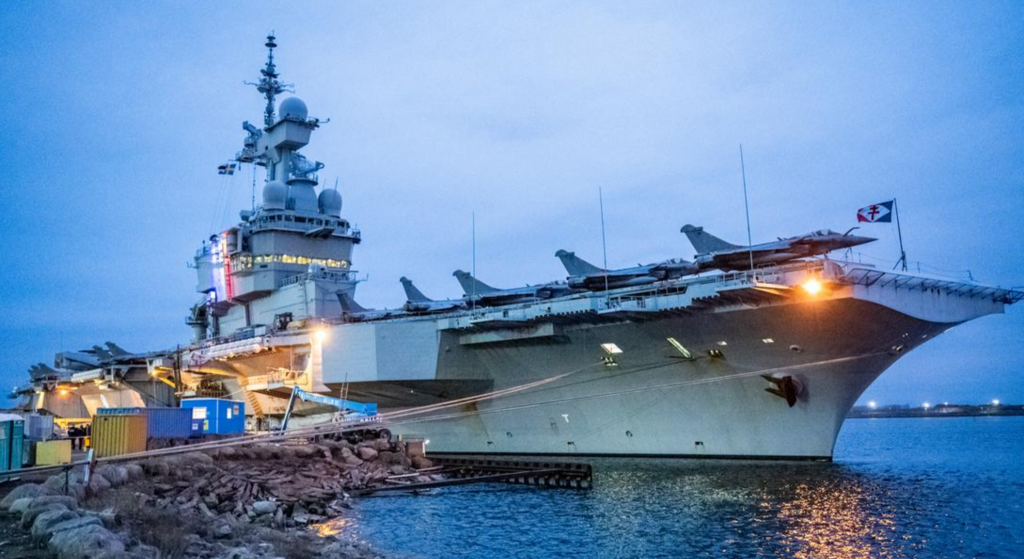
A Distant Strait With Immediate Consequences
At first glance, the Strait of Hormuz may seem far removed from everyday life in Europe. But in reality, this narrow waterway—through which a significant share of the world’s oil supply passes—has become one of the most critical pressure points for the global economy.
Now, the European Union is actively discussing new measures to ensure security in the region. The reason is simple: any disruption here doesn’t stay local—it hits Europe almost instantly.
Why Europe Is Paying Close Attention
The Strait of Hormuz is a vital artery for global energy flows. Even minor tensions can trigger:
- Sharp increases in oil and gas prices
- Rising inflation across European economies
- Immediate volatility in financial markets
For Europe, which remains heavily dependent on energy imports, stability in this region is not optional—it’s essential.
The Real Risk: Speed of Impact
What makes this situation particularly concerning is not just the scale—but the speed.
In today’s interconnected world:
- A geopolitical escalation can affect energy prices within hours
- Inflation can rise within weeks
- Financial markets react almost instantly
This creates a new kind of economic reality—one where external events rapidly translate into internal financial pressure.
From Geopolitics to Your Wallet
For many Europeans, especially those aged 30–60, these developments are no longer abstract.
They show up as:
- Higher utility and fuel costs
- Increased cost of living
- Greater uncertainty around income and savings
The connection is direct: instability in global supply routes leads to instability in personal finances.
A System Under Pressure
Europe’s efforts to secure the Strait of Hormuz highlight a broader issue—the growing fragility of the global system.
Even with coordinated political action, risks remain:
- External dependencies cannot be fully eliminated
- Market reactions are often unpredictable
- Government responses take time
This gap between events and response creates a window of financial vulnerability.
A Shift in Financial Thinking
As these risks become more visible, behavior is starting to change.
More people are beginning to ask:
- How do I protect my income from external shocks?
- Can I rely solely on traditional systems?
- What options exist for more flexible financial control?
This is where a new mindset is emerging—one focused not just on growth, but on adaptability.
Why This Moment Matters
The situation around the Strait of Hormuz is not just another geopolitical headline.
It’s a signal.
A signal that:
- Global events are increasingly unpredictable
- Economic stability can shift quickly
- Financial strategies must evolve accordingly
Conclusion: Control in an Uncertain World
Europe is working to secure critical supply routes—but the outcome is never fully guaranteed.
For individuals, the takeaway is becoming clearer:
In a world where external events can reshape your finances overnight, relying solely on the system may no longer be enough.
The question is no longer whether instability will occur.
The question is: are you prepared for it?
