
What It Means for Global Markets — and Why Technology Is Becoming the Next Battlefield
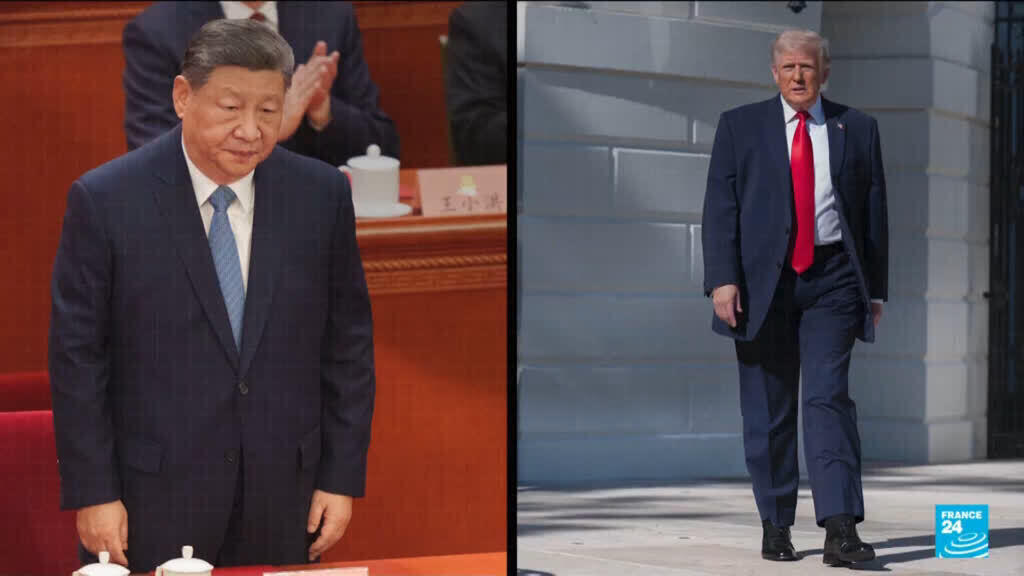
Tensions in global energy markets escalated sharply after reports that the United States has taken steps to restrict maritime activity around the Strait of Hormuz — one of the world’s most critical oil transit routes. In response, China has strongly condemned the move, warning that any disruption to energy flows could destabilize global trade and economic security.
While details remain limited, early signals from markets and policymakers suggest this is more than a temporary geopolitical flare-up. It may represent a deeper shift in how global power is exercised — not just through military or trade pressure, but through control of infrastructure, supply chains, and increasingly, technology systems.
Why the Strait of Hormuz Matters
The Strait of Hormuz is often described as the world’s most important oil chokepoint. According to the U.S. Energy Information Administration, roughly 20% of global petroleum liquids consumption passes through this narrow waterway.
Source: https://www.eia.gov/international/analysis/regions-of-interest/Strait_of_Hormuz.php
Any disruption — even temporary — has immediate consequences:
- Oil prices tend to spike
- Shipping costs increase
- Supply chains slow down
For major importers like China, the stakes are particularly high.
China’s Response
Chinese officials have called the reported blockade a “serious threat to global stability,” emphasizing the need to keep international trade routes open. The Ministry of Foreign Affairs of the People’s Republic of China urged restraint and warned against actions that could escalate tensions in already sensitive regions.
Source: https://www.fmprc.gov.cn/eng/
At the same time, analysts note that China has been accelerating efforts to diversify energy supply routes and reduce dependency on vulnerable chokepoints — including expanding pipelines and investing in alternative logistics corridors.
Immediate Market Reactions
Markets reacted quickly to the news.
Energy prices showed signs of volatility, and traders began adjusting positions in anticipation of further disruption. According to the International Energy Agency, even the perception of instability in Hormuz can trigger short-term supply shocks.
Source: https://www.iea.org/reports/oil-market-report
Beyond oil, the ripple effects extend into:
- Shipping and insurance costs
- Manufacturing supply chains
- Currency fluctuations in energy-dependent economies
From Oil to Data: A Shift in Global Power
While the immediate focus is on oil flows, some experts argue that the bigger story lies elsewhere.
Control over physical resources like oil has long defined global power. But today, that control is increasingly mirrored in the digital world — where data, infrastructure, and platforms are becoming just as critical.
The same dynamics are emerging:
- Strategic chokepoints → now include data centers and cloud infrastructure
- Supply disruptions → now affect semiconductors and digital systems
- National security → now extends to technology platforms
In other words, what Hormuz is to oil, digital infrastructure is becoming to the global economy.
The Rise of Technology Platforms in a Fragmented World
As geopolitical tensions intensify, governments and corporations are beginning to rethink how they operate — not just physically, but digitally.
We are seeing:
- Increased interest in sovereign tech infrastructure
- Growing demand for independent platforms
- Concerns about reliance on foreign-controlled systems
According to the European Commission, digital sovereignty has become a strategic priority for Europe, with initiatives aimed at reducing dependence on external technology providers.
Source: https://digital-strategy.ec.europa.eu/en
A New Opportunity: Platforms Built for a Changing World
As traditional systems face pressure, new platforms are emerging that aim to adapt to this evolving environment.
These platforms focus on:
- Faster access to global market data
- Tools for navigating volatility
- Increased transparency in financial and digital systems
For individuals and businesses alike, this shift raises an important question:
👉 How do you stay ahead in a world where both physical and digital systems are being reshaped?
Some are turning to new-generation platforms designed to provide insights and tools for navigating these changes.
Conclusion
The situation around the Strait of Hormuz highlights how quickly global stability can be affected by geopolitical decisions.
But it also points to something deeper:
The world is moving from a system defined by physical resources to one increasingly shaped by technology, data, and digital control.
As these forces converge, those who understand both sides of the equation — energy and technology — may be better positioned to navigate what comes next.
